
Businesses investing in digital marketing often use the terms PPC and paid advertising interchangeably. However, while PPC is a type of paid advertising, it is not the same thing as paid advertising as a whole.
Understanding the difference between PPC and paid advertising is important because choosing the wrong channel can lead to wasted budget, poor lead quality, and unrealistic expectations about results.
After managing paid advertising campaigns for more than six years and overseeing over $6 million in ad spend across multiple industries, I’ve found that many businesses don’t struggle because they’re using the wrong platform. Instead, they struggle because they’re expecting every paid channel to achieve the same objective.
In most cases, PPC is the best channel for capturing existing demand. However, channels such as social media advertising, YouTube advertising, and display advertising often play a critical role in creating demand and building brand awareness.
The most successful businesses rarely rely on a single channel. Instead, they build a paid advertising strategy that aligns with how customers actually discover, research, and purchase products or services.
Quick Answer: What Is the Difference Between PPC and Paid Advertising?
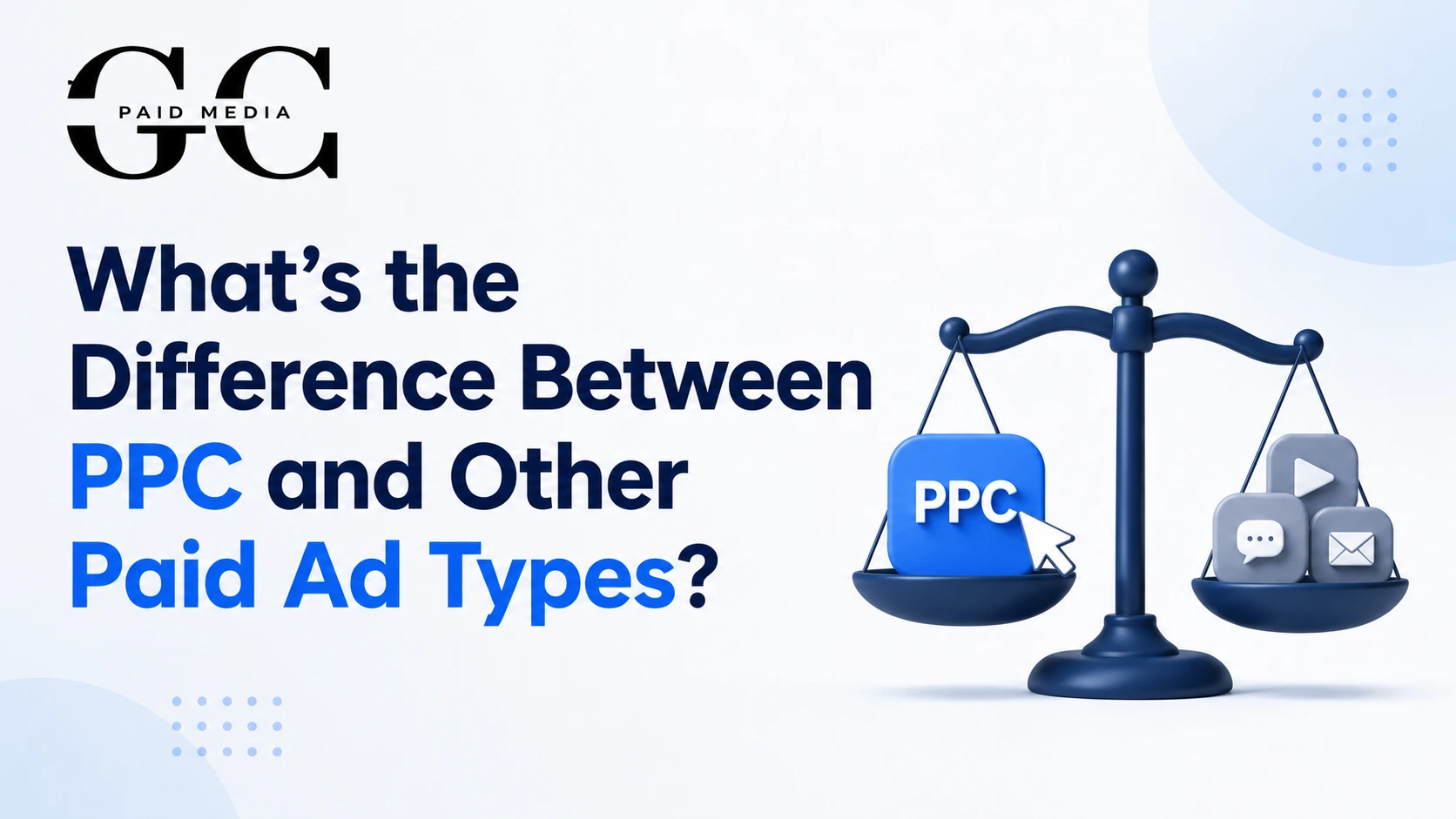
The difference between PPC and paid advertising is that PPC (Pay-Per-Click) is a specific advertising model where advertisers pay only when someone clicks on their ad, while paid advertising is a broader category that includes PPC, social media ads, video ads, display ads, programmatic advertising, influencer campaigns, and other forms of paid promotion.
Simply put:
- PPC is a type of paid advertising.
- Not all paid advertising is PPC.
- PPC primarily captures existing demand.
- Other paid ad types often help create demand and increase awareness.
For businesses looking to generate leads quickly, PPC often delivers the most direct path to conversions. However, businesses seeking long-term brand growth typically benefit from combining PPC with other paid advertising channels.
What Is PPC?
PPC, or Pay-Per-Click advertising, is a digital advertising model where advertisers pay each time someone clicks on their ad.
The most common example is Google Search Ads. When users search for terms such as:
- Emergency plumber near me
- Personal injury lawyer
- PPC management services US
- HVAC repair company
advertisers can appear at the top of search results and pay only when users click.
The primary advantage of PPC is intent.
Users are actively searching for a solution, which means they are often much closer to making a purchase decision.
Popular PPC platforms include:
- Google Search Ads
- Microsoft Ads
- Google Shopping Ads
- Google Performance Max Campaigns
- Local Service Ads
For many service-based businesses, PPC remains one of the fastest ways to generate qualified leads because it reaches potential customers at the moment they are searching for help.
What Is Paid Advertising?
Paid advertising refers to any marketing activity where a business pays to promote its message, products, or services.
This includes PPC, but it also includes many other advertising formats.
Examples include:
- Google Search Ads
- Meta Ads (Facebook and Instagram)
- YouTube Ads
- LinkedIn Ads
- Display Advertising
- Programmatic Advertising
- Native Advertising
- Connected TV (CTV) Advertising
- Influencer Marketing
Unlike PPC, many paid advertising channels focus on reaching users before they begin actively searching.
As a result, these channels are often used to build awareness, educate potential customers, and create future demand.
PPC vs Paid Ads: A Side-by-Side Comparison
Factor | PPC | Social Ads | YouTube Ads | Display Ads | LinkedIn Ads |
User Intent | High | Low-Medium | Low-Medium | Low | Medium |
Best For | Capturing Demand | Creating Demand | Awareness & Education | Retargeting | B2B Lead Generation |
Speed of Results | Fast | Moderate | Moderate | Moderate | Moderate |
Lead Quality | Often High | Varies | Varies | Varies | High for B2B |
Attribution Clarity | Strong | Moderate | Lower | Lower | Moderate |
Creative Requirements | Lower | High | Very High | Moderate | Moderate |
Scalability | Limited by Search Demand | High | High | High | Moderate |
One of the biggest mistakes businesses make is comparing all channels using only cost per lead.
While PPC often produces lower CPAs, that doesn’t automatically mean it contributes more revenue or long-term growth.
Why PPC Often Delivers Better ROI
In many industries, PPC generates stronger immediate returns because it captures people who are already looking for a solution.
For example:
A homeowner searching for “roof repair company near me” is likely much closer to making a purchasing decision than someone casually scrolling through social media.
This intent-driven behavior often leads to:
- Higher conversion rates
- Faster lead generation
- More predictable ROI
- Easier optimization
This is why PPC management services in the US are often recommended for businesses that already have proven demand and need more leads quickly.
However, PPC has limitations.
If nobody is searching for your product or service, PPC cannot create demand that doesn’t exist.
When Other Paid Advertising Channels Work Better
There are situations where PPC is not the ideal starting point.
New Product Categories
One of the most memorable examples I’ve worked on involved a B2B SaaS startup launching a new AI workflow solution.
The challenge wasn’t competition.
The challenge was awareness.
Very few people were searching for the solution because most potential customers didn’t know it existed.
Instead of focusing heavily on Google Search Ads, we prioritized:
- LinkedIn Ads
- YouTube Advertising
- Educational content campaigns
The objective was to educate decision-makers and create demand before expecting search volume to increase.
Highly Visual Businesses
For industries such as:
- Interior design
- Med spas
- Cosmetic clinics
- Luxury home services
Visual platforms often outperform search initially.
Strong before-and-after creative, video content, and social proof can generate demand more effectively than waiting for users to search.
In these situations, Meta Ads frequently become the primary acquisition channel.
The Real Secret: Demand Capture vs Demand Creation
After managing more than $6 million in ad spend, I’ve found that the biggest difference between PPC and other paid advertising channels comes down to one concept:
PPC Captures Demand
Google Search Ads work best when prospects already know they have a problem and are actively seeking a solution.
Social and Video Ads Create Demand
Platforms such as Facebook, Instagram, YouTube, and LinkedIn help businesses reach potential customers before they start searching.
As a result:
- PPC captures buyers.
- Social creates future buyers.
- Video builds awareness.
- Display reinforces messaging.
- Retargeting helps close deals.
The strongest paid advertising strategies combine both demand creation and demand capture.
Common Mistakes Businesses Make When Comparing PPC and Paid Advertising
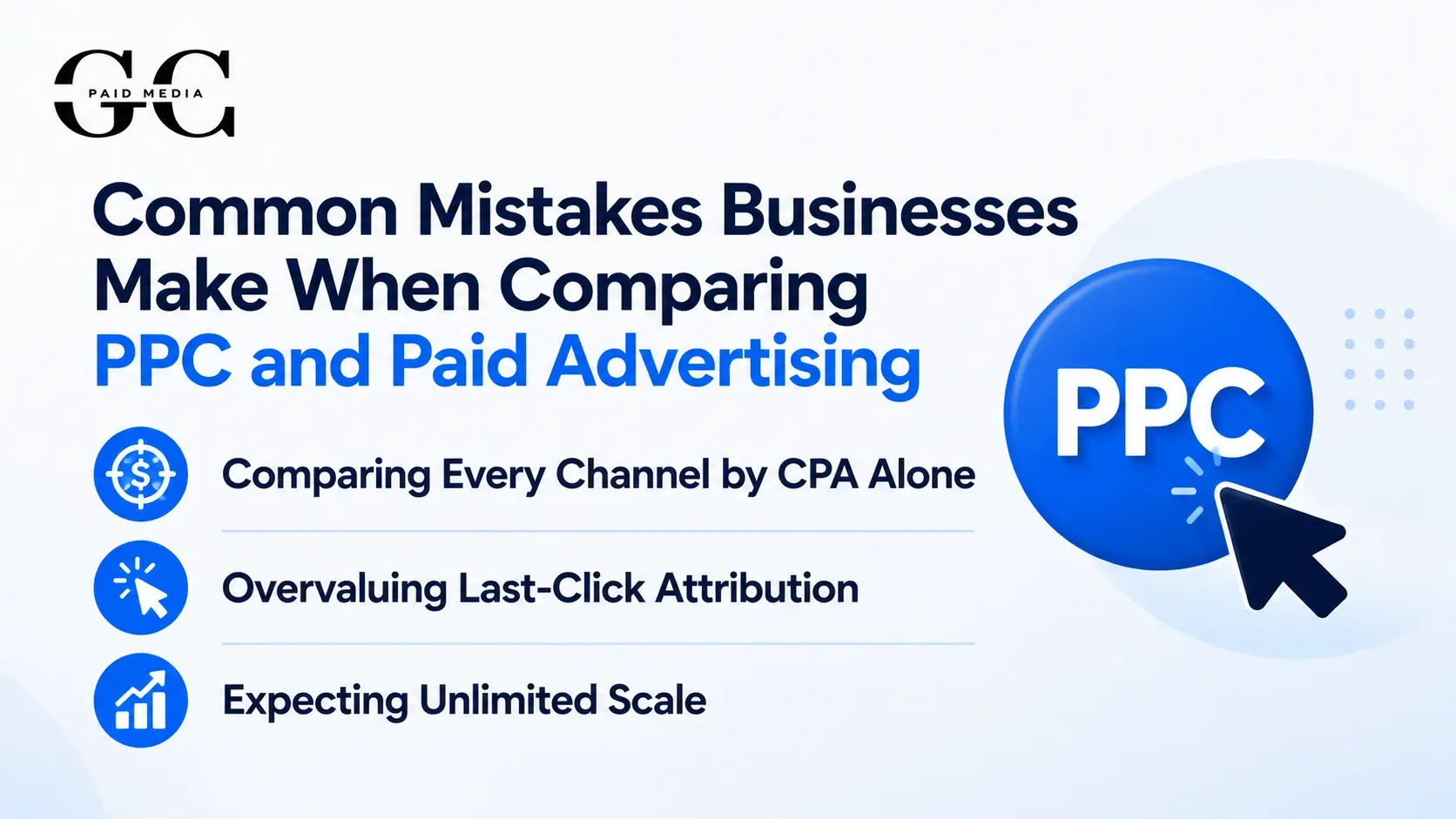
Comparing Every Channel by CPA Alone
A lower CPA does not always mean a better campaign.
Sometimes campaigns generate cheaper leads that never become customers.
Instead, businesses should evaluate:
- Lead quality
- Customer lifetime value
- Revenue generated
- Return on ad spend
Overvaluing Last-Click Attribution
Many businesses assume Google Search deserves all credit for a conversion.
However, the reality is often more complex.
A customer may:
- Discover a brand on Facebook.
- Watch a YouTube video.
- Visit the website multiple times.
- Search on Google.
- Convert through PPC.
Yet Google Search receives 100% of the credit.
This causes businesses to underestimate awareness channels.
Expecting Unlimited Scale
Many advertisers believe increasing budget automatically increases leads.
In reality, every market has a demand ceiling.
Eventually, additional spend produces diminishing returns.
Understanding demand limitations is essential for sustainable growth.
Expert Insights From Managing Over $6 Million in Ad Spend
Over the years, several patterns have consistently appeared across successful campaigns.
Most PPC Problems Are Not Keyword Problems
Businesses often assume performance issues stem from keyword targeting.
More commonly, the real issue is:
- Weak offers
- Poor landing pages
- Low trust signals
- Slow websites
Tracking Problems Are More Common Than Bidding Problems
Incorrect conversion tracking can lead platforms to optimize for the wrong actions.
As a result, businesses make decisions using inaccurate data.
Broad Match Has Improved Significantly
Many advertisers still rely heavily on tightly controlled keyword structures.
However, with strong conversion data, broad match campaigns often outperform more restrictive approaches.
Meta Influences More Conversions Than It Receives Credit For
In many accounts, Meta advertising contributes significantly to conversions that later appear in Google Analytics as search traffic.
Ignoring this influence can lead to poor budget allocation decisions.
Strategy Usually Beats Platform Tweaks
The biggest account improvements rarely come from changing bids or campaign settings.
Instead, growth often comes from:
- Better offers
- Stronger messaging
- Improved creative
- Higher conversion rates
- Better measurement systems
Recommended Budget Guidelines by Channel
While every business is different, these are the minimum budgets I typically recommend.
Channel | Recommended Monthly Budget |
Google Search PPC | $1,500–$5,000+ |
Google Performance Max | $2,000–$10,000+ |
Meta Ads | $2,000–$10,000+ |
YouTube Ads | $3,000–$10,000+ |
Display Advertising | $3,000–$10,000+ |
LinkedIn Ads | $5,000–$15,000+ |
My general rule is simple:
Budget enough to generate at least 30–50 conversions per month.
If your budget is too low to collect meaningful data, optimization becomes significantly more difficult regardless of the advertising channel.
How to Choose the Right Paid Advertising Channel
Choose PPC when:
- Demand already exists.
- You need leads quickly.
- You want measurable ROI.
- Search volume is strong.
- Customers actively search for your service.
Choose Social or Video Advertising when:
- You are launching a new product.
- Search demand is low.
- Visual content is important.
- Brand awareness is a priority.
- You need to educate the market.
Choose a Multi-Channel Strategy when:
- You want sustainable growth.
- You have sufficient budget.
- You need both awareness and lead generation.
- Competitors dominate search results.
For most businesses, the best answer is not PPC versus paid advertising.
The best answer is using multiple paid channels strategically based on where customers are in their buying journey.
Final Thoughts: PPC vs Paid Advertising
When evaluating the difference between PPC and paid advertising, it’s important to remember that PPC is just one component of a broader paid media strategy.
PPC remains one of the most effective channels for capturing existing demand because it reaches prospects actively searching for solutions. As a result, it often delivers faster feedback, stronger conversion rates, and clearer ROI.
However, channels such as Meta, YouTube, LinkedIn, and display advertising play a critical role in creating awareness and generating future demand.
The businesses that achieve the strongest long-term results rarely rely on a single platform. Instead, they combine demand generation and demand capture to create a predictable growth engine.
If you’re unsure which paid advertising channel is right for your business, the best approach is to evaluate your goals, customer journey, search demand, and available budget before investing.
Need Help Choosing the Right Paid Advertising Strategy?
Whether you’re looking for PPC Management Services in the US, a Paid Ads Specialist in the US, or a complete paid advertising strategy, the right channel mix can dramatically improve lead quality and return on investment.
At GC Paid Media, we help businesses identify the most effective advertising channels based on their industry, goals, and growth stage.
If you’d like an expert review of your current campaigns, request a PPC Audit or contact us for a custom paid advertising strategy recommendation.