
Introduction
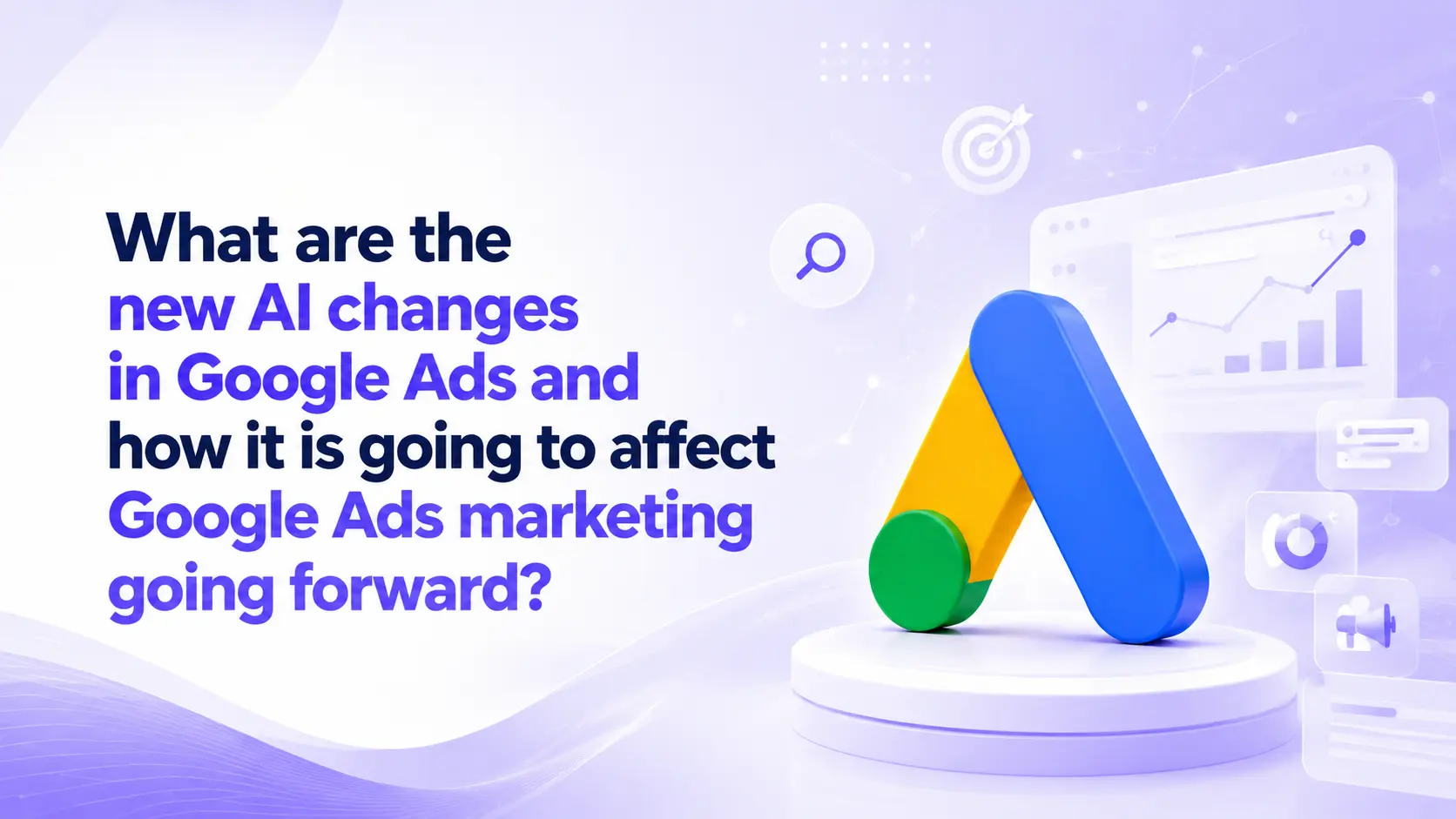
Artificial intelligence is no longer just another feature inside Google Ads. Instead, it is rapidly becoming the foundation upon which the entire advertising platform operates.
Over the last few years, Google has steadily introduced automation-driven features such as Smart Bidding, Broad Match, Responsive Search Ads, Performance Max, and AI-powered asset generation. However, the latest Google Marketing Live announcements make one thing clear: Google is moving toward a future where advertisers focus less on campaign management and more on business outcomes.
For marketers, agencies, and business owners, this shift raises an important question:
What do these Google Ads AI changes actually mean for the future of digital advertising?
After managing more than $6 million in Google Ads spend across multiple industries over the past six years, I believe we are witnessing one of the biggest transformations in PPC advertising since the introduction of Smart Bidding.
The future of Google Ads is becoming more outcome-driven and less advertiser-controlled.
While that may sound concerning to some advertisers, it also presents significant opportunities for businesses that understand how to leverage AI correctly.
In this article, I’ll break down the latest Google Ads AI updates, explain what they mean for advertisers, and share real-world insights from managing campaigns across eCommerce, lead generation, SaaS, healthcare, local services, and B2B industries.
What Are the Latest Google Ads AI Changes?
Google’s recent AI advancements are not isolated updates. Instead, they represent a broader shift toward machine learning-driven campaign management.
Some of the most important Google Ads AI features include:
- AI Max for Search Campaigns
- Enhanced Smart Bidding capabilities
- Performance Max improvements
- AI-generated creative assets
- AI-powered Search experiences
- Predictive audience targeting
- Automated campaign creation
- Improved measurement and attribution systems
Although each update serves a different purpose, they all share a common goal:
Reducing manual campaign management while increasing automation-driven performance.
Traditionally, advertisers manually controlled:
- Keywords
- Bids
- Audiences
- Ad copy
- Device adjustments
- Placement selections
Today, Google increasingly wants advertisers to focus on defining outcomes rather than controlling every campaign variable.
As a result, success is becoming less about platform tactics and more about measurement quality.
Why Google Is Moving Toward an AI-First Advertising Platform
Many advertisers view Google’s AI initiatives as attempts to simplify campaign management.
However, I believe Google’s objective goes much deeper.
Google’s goal is not simply to help advertisers manage campaigns more efficiently.
Google’s goal is to automate campaign management altogether.
This shift is happening because consumer behavior has become dramatically more complex.
Today’s customer journey often includes:
- Multiple devices
- Multiple touchpoints
- Search
- YouTube
- Gmail
- Display
- Discovery feeds
- AI-powered search experiences
Consequently, the number of signals influencing purchase decisions has expanded beyond what humans can realistically process.
Machine learning systems can evaluate millions of data points simultaneously, including:
- Search intent
- Device behavior
- Location signals
- Browsing patterns
- Historical conversion data
- Audience engagement trends
Because of this, Google’s AI systems are increasingly outperforming manual campaign management in many scenarios.
Nevertheless, there is an important distinction advertisers must understand:
Automation does not eliminate the need for expertise. It changes where expertise creates value.
AI Max for Search Campaigns: One of the Most Important Google Ads AI Updates
Among the newest Google Ads AI changes, AI Max for Search Campaigns may ultimately become one of the most influential.
Historically, advertisers relied heavily on keyword selection to determine which searches triggered ads.
For years, campaign success often depended on:
- Building keyword lists
- Organizing match types
- Managing negatives
- Monitoring search terms
However, Google’s AI-driven approach is gradually shifting away from strict keyword targeting and toward intent-based targeting.
Instead of matching exact phrases, Google’s systems increasingly focus on understanding what users are actually trying to accomplish.
This evolution is closely connected to the rise of Broad Match.
Broad Match Has Changed More Than Most Advertisers Realize
Several years ago, many PPC professionals viewed Broad Match with skepticism.
In many cases, that skepticism was justified.
Broad Match frequently generated irrelevant traffic, wasted budget, and poor lead quality.
Today, however, the landscape looks very different.
After extensive testing over the past year, my conclusion is straightforward:
Broad Match has improved significantly, but only when supported by high-quality data.
Broad Match tends to perform exceptionally well when accounts have:
- Strong conversion tracking
- Smart Bidding strategies
- Enhanced Conversions
- Consistent conversion volume
- Good negative keyword governance
- Offline conversion imports
Under these conditions, Google’s machine learning systems can identify valuable search intent patterns that advertisers would never discover manually.
As a result, mature accounts often outperform traditional Exact Match-only structures.
However, Broad Match is not universally effective.
Accounts with weak measurement systems often experience:
- Poor-quality leads
- Irrelevant traffic
- Higher acquisition costs
- Reduced conversion efficiency
Therefore, the real question is no longer:
“Should I use Broad Match?”
Instead, the question has become:
“Does Google have enough high-quality conversion data to make Broad Match intelligent?”
If the answer is yes, Broad Match often produces excellent results.
If the answer is no, performance frequently suffers.
Performance Max AI: Powerful but Frequently Misunderstood
No discussion about Google Ads automation would be complete without addressing Performance Max.
Performance Max has become one of Google’s flagship AI-driven campaign types because it combines inventory across:
- Search
- Shopping
- YouTube
- Display
- Discover
- Gmail
- Maps
This allows advertisers to reach users throughout the entire customer journey.
In my experience, Performance Max is a strong campaign type in 2026.
However, it is not a magic bullet.
Performance Max performs best when advertisers provide Google with:
- Accurate conversion tracking
- Enhanced Conversions
- Value-based bidding signals
- Offline conversion imports
- Reliable first-party data
When these elements are in place, PMax can become one of the highest-performing campaigns in an account.
For eCommerce advertisers especially, Performance Max often delivers substantial scale while maintaining strong return on ad spend.
Likewise, lead generation campaigns can benefit significantly when qualified lead signals are fed back into Google’s systems.
Nevertheless, Performance Max still has limitations.
The biggest challenges remain:
- Limited transparency
- Reduced search term visibility
- Less channel-specific reporting
- Incrementality measurement challenges
Compared to traditional Search campaigns, advertisers often have fewer insights into exactly where the budget is being allocated.
That lack of visibility continues to frustrate many experienced PPC professionals.
Despite these concerns, my position remains clear:
If your measurement is strong, Performance Max is often one of the highest-performing campaigns in the account. If your measurement is weak, it simply optimizes toward the wrong outcomes faster.
The Biggest Misconception About AI in Google Ads
Perhaps the most dangerous misconception surrounding AI advertising is the belief that automation can compensate for weak business fundamentals.
Many businesses assume:
“If we enable AI features, performance will automatically improve.”
Unfortunately, that’s not how advertising works.
AI cannot fix:
- Weak offers
- Poor product-market fit
- Bad landing pages
- Slow sales processes
- Uncompetitive pricing
- Low-quality creative
- Incorrect conversion tracking
What AI does exceptionally well is optimize around existing conditions.
In other words, AI acts as an amplifier.
If your fundamentals are strong, AI can help scale results faster.
However, if your fundamentals are weak, AI often accelerates poor outcomes as well.
The best-performing advertisers are not succeeding because they use more automation.
They are succeeding because they provide AI with:
- Better data
- Better offers
- Better creative assets
- Better conversion signals
- Better business objectives
Simply put:
AI does not create demand. It helps capture and scale demand more efficiently.
Real-World Example: When Google Ads Automation Increased Leads but Reduced Revenue
One of the most important lessons advertisers need to understand about Google Ads automation is that better platform metrics do not always translate into better business outcomes.
In fact, I have seen multiple situations where Google’s automation improved nearly every visible KPI while actual revenue performance deteriorated.
A B2B SaaS campaign provides a perfect example.
Before Automation
The account was running:
- Search campaigns
- Phrase Match and Exact Match keywords
- Manual search term reviews
- Target CPA bidding
Performance looked healthy:
- Approximately 100 leads per month
- SQL rate around 35%
- Consistent sales pipeline generation
The business was growing steadily, although there was pressure to scale lead volume.
After Broad Match and Performance Max
To increase scale, we expanded into Broad Match and Performance Max while allowing Google’s automation systems more flexibility.
Initially, the results appeared outstanding.
We saw:
- Lead volume increase by approximately 50%
- CPA decrease by roughly 20%
- More conversion activity across the account
From a Google Ads reporting perspective, everything looked successful.
However, the sales team quickly identified a problem.
The quality of incoming leads had declined significantly.
The SQL rate dropped from 35% to approximately 18%.
Demo attendance rates fell.
Sales conversations became less productive.
Most importantly, closed-won revenue began to decline.
What Actually Happened?
The answer was surprisingly simple.
Google optimized exactly as instructed.
The primary conversion action was:
Form Submitted
As a result, Google’s AI found more people willing to submit forms.
Unfortunately, many of those people were not:
- Decision-makers
- Qualified buyers
- Companies within the target size range
- Prospects ready to purchase
From Google’s perspective, campaign performance improved.
From the business’s perspective, performance worsened.
The Solution
Instead of optimizing toward raw leads, we imported:
- Marketing Qualified Leads (MQLs)
- Sales Qualified Leads (SQLs)
- Opportunities
- Closed-won revenue
This allowed Google’s machine learning systems to understand which leads actually generated business value.
Within a few months:
- Lead volume decreased
- CPA increased
- Lead quality improved significantly
- Pipeline value increased
- Revenue recovered
The lesson is one every advertiser should remember:
Google’s automation rarely optimizes for the wrong thing. It optimizes for exactly what you tell it to optimize for.
If you optimize for form submissions, you’ll get more form submissions.
If you optimize for qualified opportunities and revenue, you’ll typically get more qualified opportunities and revenue.
This is why the future of Google Ads is increasingly a measurement challenge rather than a bidding challenge.
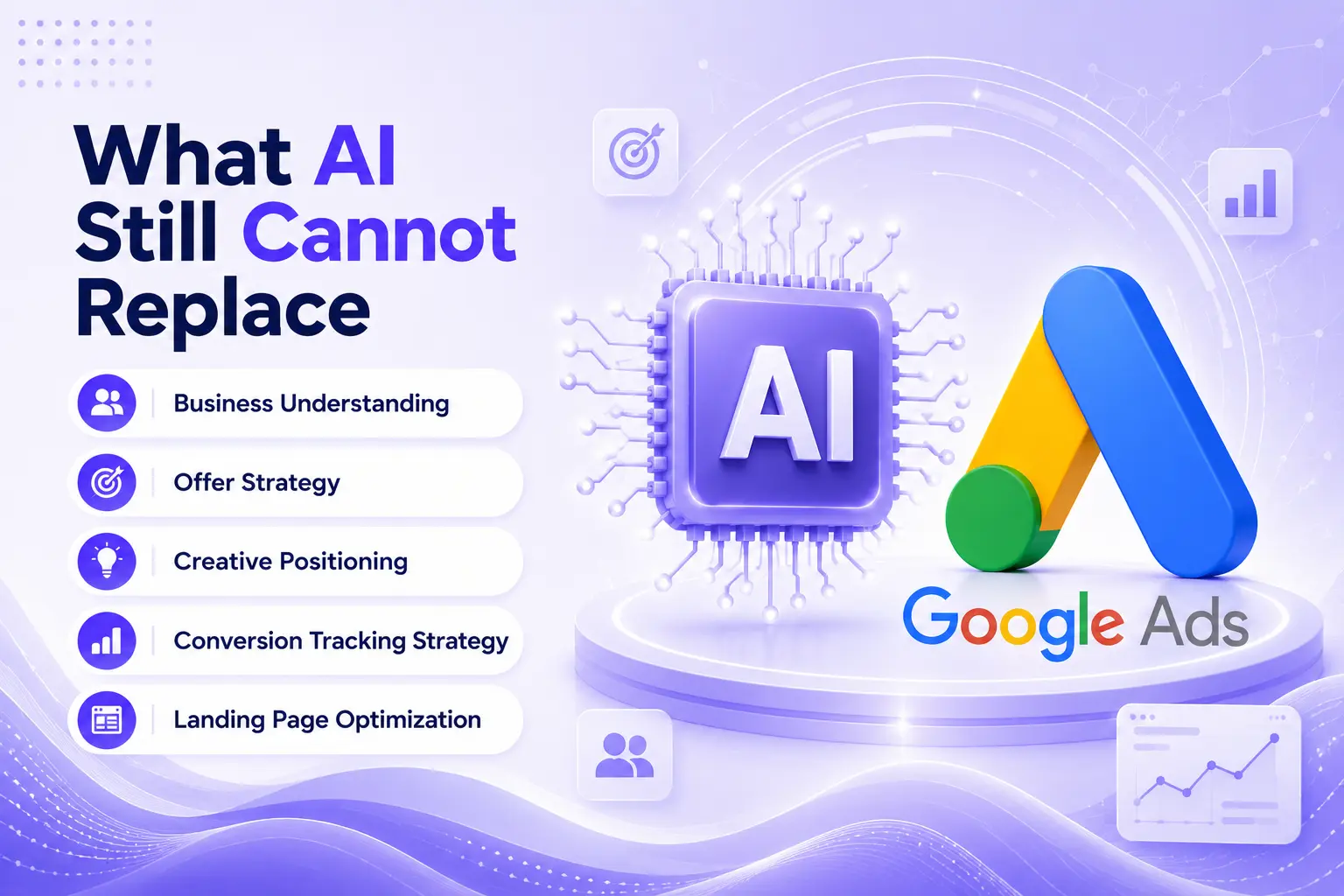
What AI Still Cannot Replace
As Google’s AI capabilities continue to improve, many marketers wonder whether PPC specialists will eventually become obsolete.
My answer is no.
However, the role of PPC specialists is changing dramatically.
The skills that created success five years ago are not necessarily the skills that will create success over the next five years.
If I had to identify the single most important capability AI still cannot replace, it would be:
Business Understanding
AI is becoming incredibly effective at execution.
It can:
- Adjust bids
- Discover audiences
- Generate ad variations
- Allocate budget
- Identify conversion patterns
However, AI still struggles with understanding how businesses create value.
That understanding influences everything else.
1. Business Understanding
The best advertisers understand:
- Customer economics
- Margins
- Sales processes
- Lead qualification
- Competitive positioning
- Customer lifetime value
Without this context, optimization becomes meaningless.
2. Offer Strategy
AI can generate endless ad variations.
However, it cannot reliably determine which offer will resonate most strongly with a specific market.
An average campaign with a great offer often outperforms a great campaign with an average offer.
3. Creative Positioning
AI can generate content.
What it cannot consistently do is identify the unique positioning that differentiates a business from competitors.
That remains a human skill.
4. Conversion Tracking Strategy
AI relies entirely on the data it receives.
Humans still decide:
- What constitutes a conversion
- Which actions matter most
- How business outcomes should be measured
5. Landing Page Optimization
Although AI tools can suggest improvements, they still lack a deep understanding of customer psychology, objections, trust signals, and purchase motivations.
For this reason, human expertise remains essential.
The Best Google Ads Specialists Are Becoming Business Analysts
One of the biggest shifts happening within the PPC industry is the evolution of the specialist role.
Historically, successful PPC managers spent most of their time:
- Building keyword lists
- Managing bids
- Reviewing search terms
- Creating ad groups
- Adjusting budgets
Today, Google’s automation handles many of these responsibilities.
As a result, the highest-performing marketers are spending more time on:
- Revenue attribution
- Conversion architecture
- First-party data strategy
- Offer development
- Customer journey optimization
- Sales process alignment
The gap between average and elite advertisers is increasingly not platform knowledge.
It is business understanding.
The future belongs to marketers who can bridge the gap between advertising platforms and business outcomes.
My Predictions for the Future of Google Ads
If I had to summarize the future of Google Ads in one sentence, it would be this:
In the next three years, Google Ads will become more outcome-driven and less advertiser-controlled.
Nearly every major platform update supports this prediction.
More Automation
Google will continue reducing manual campaign management requirements.
Campaigns will increasingly rely on machine learning for:
- Targeting
- Bidding
- Creative optimization
- Budget allocation
More Value-Based Bidding
Instead of optimizing toward leads, clicks, or basic conversions, advertisers will increasingly optimize toward:
- Revenue
- Profit
- Customer lifetime value
- Qualified opportunities
Less Keyword Management
Keywords will remain important, but their influence will gradually decrease.
Intent signals and machine learning predictions will play a larger role in determining ad eligibility.
More First-Party Data
Privacy changes are making first-party data more valuable than ever.
Advertisers who collect and utilize customer data effectively will gain significant competitive advantages.
Less Channel-Specific Management
Google is steadily moving toward unified campaign types.
Advertisers will spend less time optimizing individual channels and more time managing overall business outcomes.
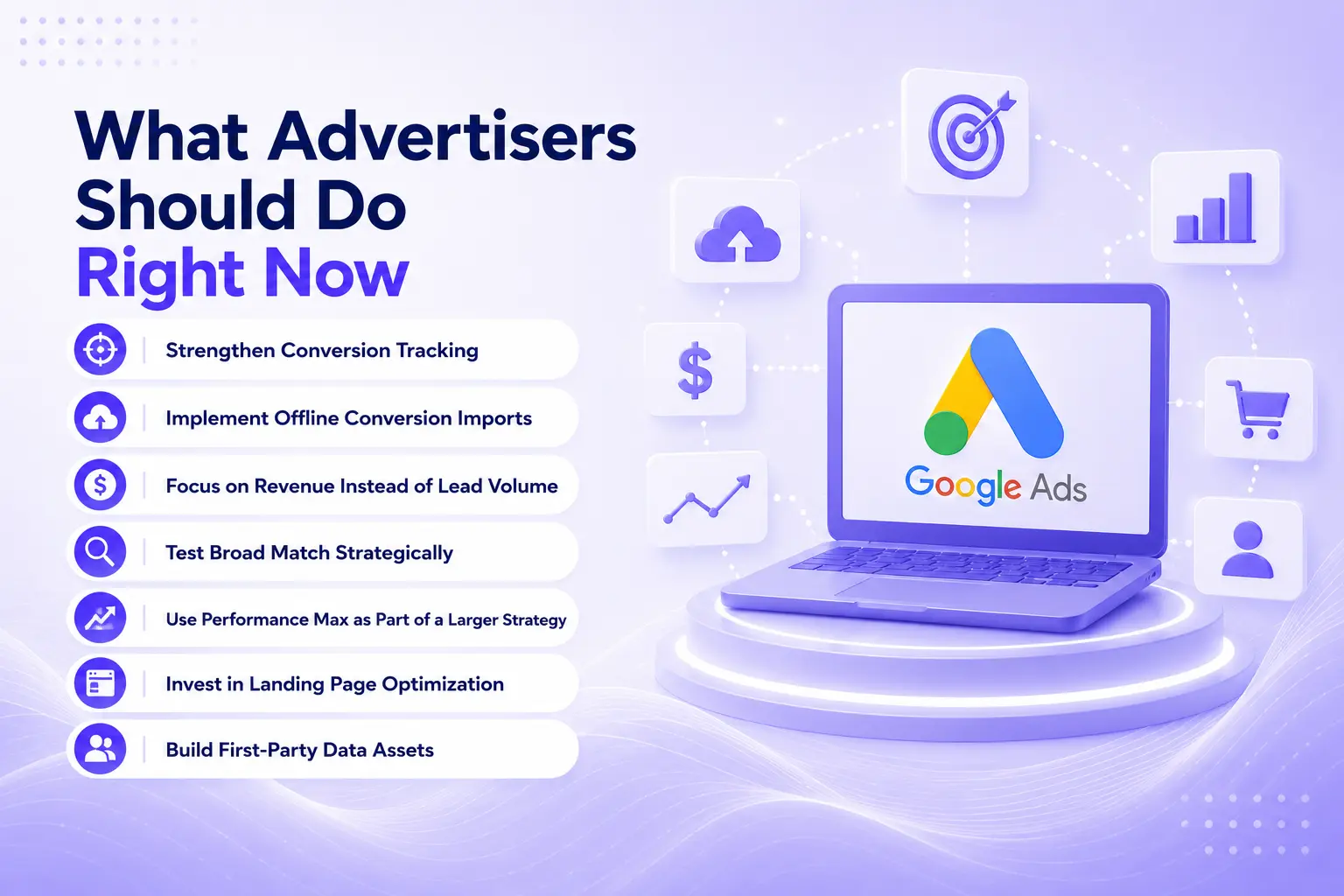
What Advertisers Should Do Right Now
The future of PPC advertising is already taking shape.
Businesses that adapt early will have a substantial advantage.
Here are the most important actions I recommend.
1. Strengthen Conversion Tracking
Nothing matters more than measurement quality.
Ensure your account includes:
- Accurate conversion tracking
- Enhanced Conversions
- Server-side tracking where appropriate
- CRM integration
2. Implement Offline Conversion Imports
If you’re a lead generation business, importing offline conversions is becoming essential.
Google needs visibility into:
- Qualified leads
- Opportunities
- Closed-won deals
Without these signals, automation often optimizes toward the wrong outcomes.
3. Focus on Revenue Instead of Lead Volume
More leads do not necessarily mean more revenue.
Measure success based on business outcomes rather than platform metrics.
4. Test Broad Match Strategically
Broad Match has improved significantly.
However, it should be deployed carefully and supported by strong conversion data.
5. Use Performance Max as Part of a Larger Strategy
Performance Max should complement your account structure rather than replace everything else.
Maintain a balanced approach that includes Search campaigns, remarketing, audience targeting, and measurement initiatives.
6. Invest in Landing Page Optimization
As targeting becomes increasingly automated, landing page performance becomes a bigger competitive advantage.
Small improvements in conversion rates can dramatically improve overall campaign profitability.
7. Build First-Party Data Assets
Businesses should actively invest in:
- CRM systems
- Customer databases
- Email marketing
- Customer segmentation
- Lifetime value tracking
These assets will become increasingly important as AI-driven advertising evolves.
Final Thoughts: The Future of Google Ads Is Not About More Automation, It's About Better Inputs
For businesses evaluating the next stage of conversational advertising, explore our ChatGPT Ads agency and management services for campaign planning, creative development, conversion tracking and controlled testing.